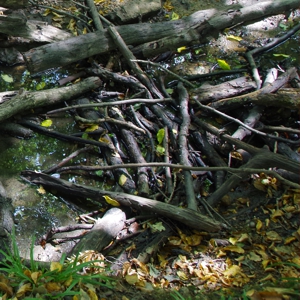
Rotting wood is an integral and important component of woodland. It is home to an enormous variety of fungi and invertebrates, and provides shelter for birds and bats. It is estimated that between 20% and 25% of all the species in a woodland live in dead wood.
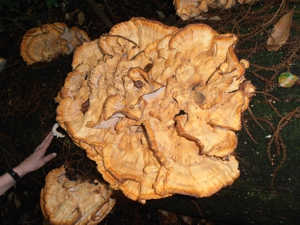
Many longlived trees become hollow as fungi digest the heartwood, leaving the living bark and sapwood. By the time they reach 300 years old half of all oak trees are hollowed out by heartwood specialists such as Chicken of the Woods Laetiporus sulphureus. The tree remains perfectly healthy and can live for hundreds of years more.
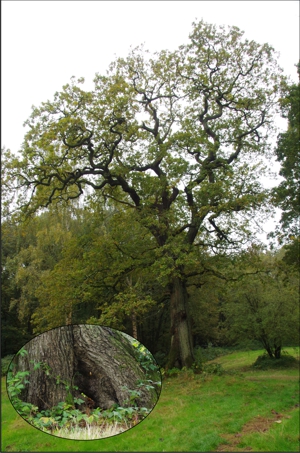
These hollow trees are home to birds, bats and foxes while water filled cavities are the home to the larvae of many of the pretty hoverflies, such as Myathropa florea the “Batman hoverfly”, that pollinate our flowers in summer.
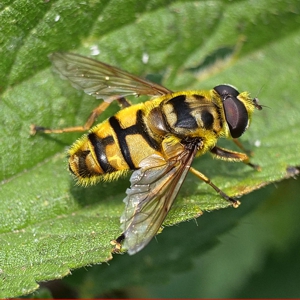
The fungi in turn are fed on by a great variety of insects, some eating the mycelium within the rotting wood, others feeding on the fungal fruiting bodies. Most such insects are specialists, adapted to be resistant to the particular defense chemical made by the fungus, and therefore dependent on the continued presence of those fruiting bodies in the woodland. For example the larvae of the beetle Eledona agricola live only in the fruiting bodies of Chicken of the Woods. That is why one should never forage fungi from nature reserves.
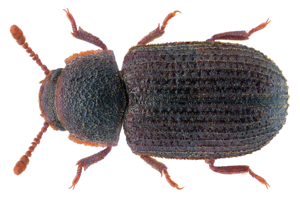
Trees felled by people, wind or beavers are a very different resource. They are rich in the sugars and protein of the living cells of the tree, however they are also full of the defense chemicals made by the living tree. A completely different collection of fungi and insects, resistant to these defense chemicals, colonize freshly felled wood, from bark beetles to the Witches’ Butter fungus Exidia glandulosa.
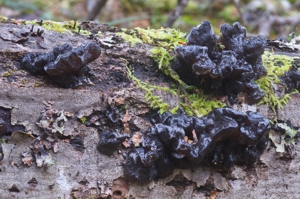
For all these reasons we leave rotting and dead wood in the woodland unless there is a very good reason to remove it. Where we fell trees to create glades or enlarge grassland areas we often stack the logs in piles. As well as being a refuge for snakes, voles and beetles over the winter such a pile provides a range of habitats for fungi, from the dryer bark on the top to the wet wood touching the soil.